
The Monster We Keep Making
Frankenstein's Monster and Unintended Consequences

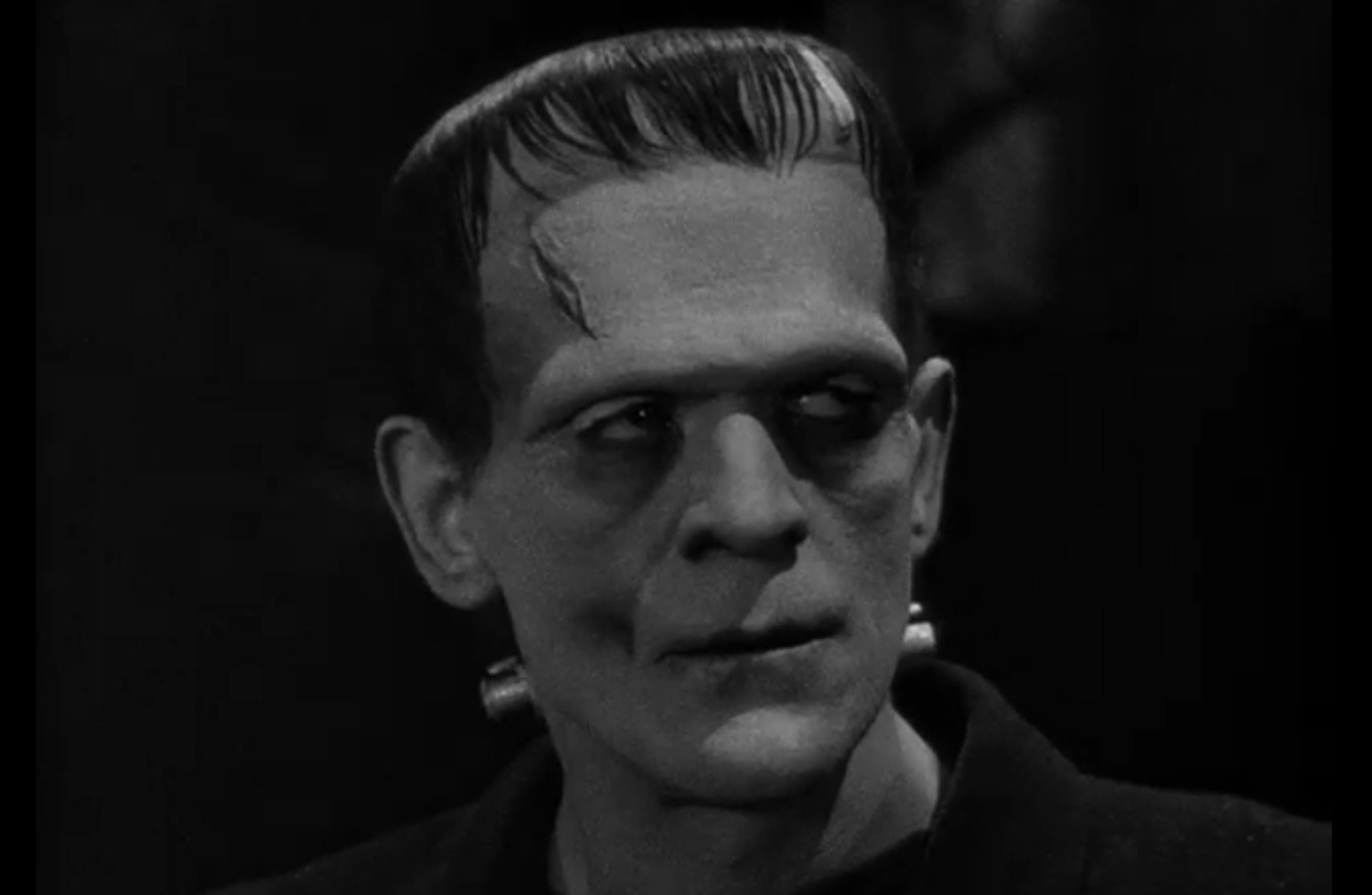
One of the most dangerous failures of power is the failure to imagine consequences.
The latest example is the U.S. war with Iran: Policies are announced. Bombs are dropped. Institutions are dismantled.
Only afterward does the question arise: How did this happen?
But the truth is simpler. It happened because no one in power stopped to imagine what would happen next.
[Please note: The themes explored in this series, The Revolution Will Be Televised, are expanded on in my documentary, How to Save Democracy, which is now available to stream on Fandango at Home and Vimeo on Demand, along with cable on demand if you have Cox or Comcast as your cable providers. You can also buy it on Amazon. In the spring it will be available for universities and library patrons through Kanopy.]
Frankenstein’s Warning
Two centuries ago, Mary Shelley wrote a story about this exact failure.
In Frankenstein; or, The Modern Prometheus, Victor Frankenstein assembles life from fragments of the dead. The novel is not simply a horror story. It’s an allegory about the dangerous combination of ambition and shortsightedness.
Prometheus — the titan who stole fire from the gods — has long symbolized humanity’s drive for knowledge and progress. Shelley understood something deeper: the pursuit of power without wisdom can unleash forces we cannot control.
Victor Frankenstein succeeds in creating life. But he fails to imagine responsibility. Only after the creature awakens does he begin to understand what he has done.
And by then it is too late — the monster has already entered the world.
Smash-and-Grab Government
We are living through a modern version of that story.
The Trump administration’s decision to launch a war against Iran exemplifies what New York Times columnist Thomas Edsall calls a “smash-and-grab” style of governing — decisions made impulsively, with little regard for the human or institutional wreckage left behind.
The administration appears to have attacked Iran without preparing for the scale of retaliation, the danger to Americans stationed across the region, the inflationary shock of rising fuel prices, or the political backlash even within its own coalition.
The consequences arrived almost immediately.
One strike hit a girls’ elementary school, killing at least 175 people — many of them children.
War always produces tragedy. But tragedy becomes atrocity when decisions are made recklessly.
And the war is only one example.
Another policy choice — the dismantling of the U.S. Agency for International Development — may have had consequences on a scale almost impossible to comprehend. According to epidemiologist Brooke Nichols of Boston University, the loss of humanitarian programs could result in the deaths of more than 262,000 adults and over 518,000 children in a single year.
Nearly 800,000 lives, each one the downstream effect of a decision made far away from where the consequences would fall.
The Short-Term Civilization
This pattern is not unique to one administration. It’s the operating logic of the system itself.
American political culture is structured around the short term: election cycles. News cycles. Profit cycles.
The next quarter. The next rally. The next burst of outrage on cable news.
In this environment, the future becomes invisible. Decisions are judged not by their long-term consequences, but by their immediate impact: the stock price, the poll number, the applause line.
Act now. Deal with the fallout later.
But later always comes. And later often arrives as catastrophe.
The Seventh Generation
There was once another way to think about responsibility.
Many Native American traditions urged leaders to consider how their decisions would affect the seventh generation into the future.
Seven generations. A century and a half.
The principle recognized something modern politics has largely forgotten: actions ripple through time: a law passed today shapes the lives of people not yet born. A war begun today echoes across decades. A system built on exploitation eventually devours itself.
But the dominant ethos of modern America asks a different question: What benefits me now?
The horizon collapses. Responsibility shrinks. The future becomes collateral damage.
The Monster’s Many Names
Again and again we see the same pattern.
Technologies unleashed without guardrails. Financial systems engineered for profit until they collapse. Social media platforms optimized for engagement until they corrode democracy itself. Political movements fueled by grievance until they drift toward authoritarianism.
Each innovation justified in the moment. Each warning dismissed. Until the consequences arrive.
The monster has many names now: Climate catastrophe. Oligarchy. Permanent and endless war. Disinformation. Authoritarian rule. Late stage capitalism.
But they all share the same origin story: power without foresight. Action without wisdom.
The Future Is Watching
Mary Shelley understood something about human nature that we still struggle to accept: the danger is not knowledge. The danger is arrogance.
Victor Frankenstein believed he was advancing civilization. Only later did he realize he had unleashed something he could not control.
Today we are repeating the same experiment on a planetary scale.
And somewhere in the future, generations not yet born will live inside the consequences of decisions being made right now. The question is not whether consequences will come. They always do.
The question is whether we will learn to imagine them before the monster wakes.
Because once it does, it rarely goes quietly.